
Is Solar Still Worth It In 2026?

Yes, solar is still worth it in 2026 for most homeowners in Maryland and Virginia. However, the path to savings now depends heavily on your financing choice, your local net metering rules, and a few state-specific programs.
If you’ve been putting off solar because you heard the tax credit is gone, take a breath; you haven’t missed your chance. You just need a different set of numbers than the ones that worked in 2025.
The federal government ended the 30% residential solar tax credit under Section 25D on December 31, 2025, as part of the One Big Beautiful Bill. That single change has triggered a wave of nervous headlines, and a lot of homeowners in Maryland, Virginia, and D.C. are now wondering if solar silently stopped making sense. It didn’t. It just changed shape, and where you live matters more now than it did a year ago.
What Actually Changed In 2026?
The tax credit didn’t disappear for everyone. It disappeared for cash and loan buyers specifically.
The Residential Clean Energy Credit (Section 25D) lets homeowners deduct 30% of their solar system cost from their federal taxes if they bought the system outright or financed it with a loan. That credit is gone for any system installed after December 31, 2025. For a full breakdown of how the credit worked before this change, see how the federal solar tax credit works.
But there’s a second federal credit, Section 48E, which applies to commercially owned systems. This change marks the official end of the traditional residential solar tax credit in 2026 for individual buyers. That’s the credit solar lease and power purchase agreement (PPA) companies use, because they technically own the panels on your roof, not you.
So if you go the lease or PPA route, that 30% value hasn’t actually vanished; it just gets captured by the leasing company first, and is supposed to flow back to you as a lower monthly payment.
| Before 2026 | 2026 and Beyond | |
| Cash/loan purchase | 30% federal credit (Section 25D) | No federal credit |
| Lease/PPA | Company gets 30% credit, partial pass-through | Company still gets 30% (Section 48E), through 2027 |
| Net metering | Full retail credit in most states | Mostly unchanged in MD/VA/DC, at risk in PA |
Cash purchases lost their biggest financial accelerant, which means payback periods stretched out, typically from 6-9 years to 9-14 years nationally. Lease and PPA deals, meanwhile, became relatively more attractive than they were a year ago, since they’re now the only path to capturing that 30% value up front.
Which option actually wins for you depends on the math and on incentives specific to Maryland, Virginia, and D.C.
How Can You Calculate Solar Savings In 2026?
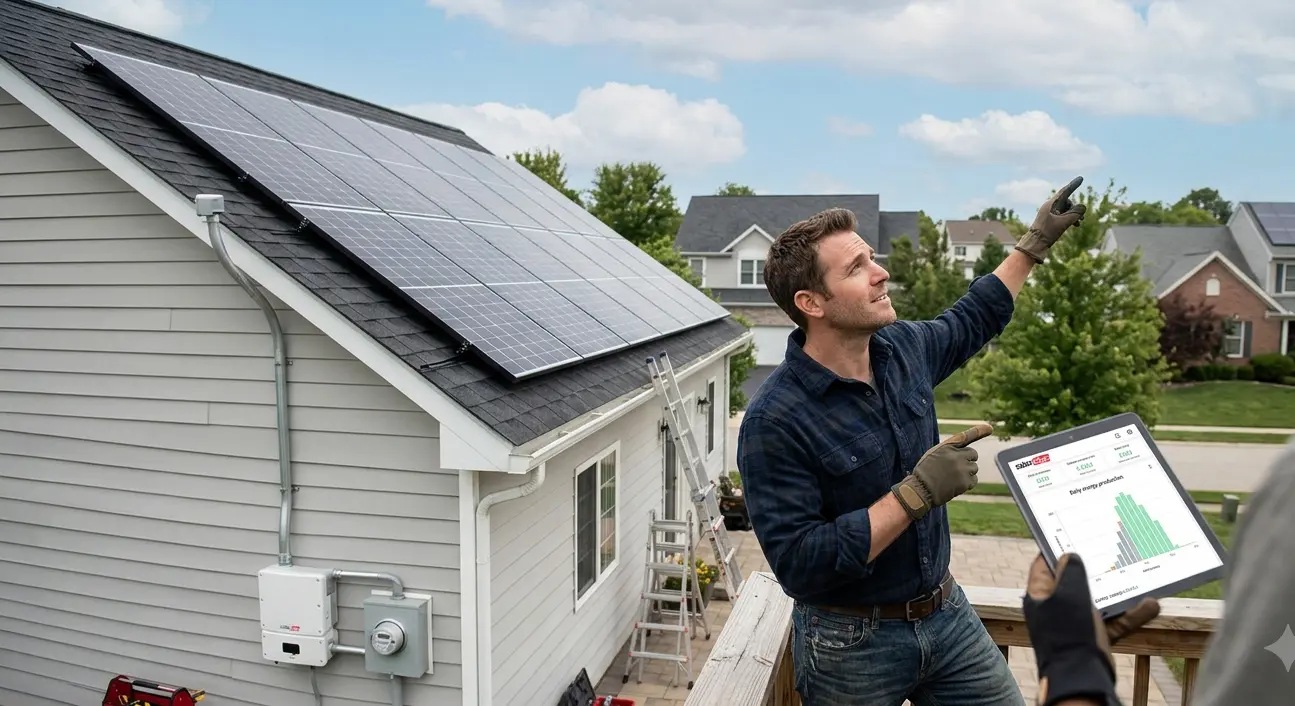
Every solar calculator uses some version of the same formula. Here it is:
- Annual production (kWh) = System size (kW) × peak sun hours per day × 365
- Net cost = System cost − any incentives you qualify for
- Payback period = Net cost ÷ your annual electricity savings
The two numbers that move the needle most for MD/VA/DC homeowners are the installed cost per watt, see solar panel cost in 2026, and your local electricity rate.
Solar Installed Cost In 2026
Most homeowners in this region are seeing $2.50–$3.50 per watt installed. That puts a typical 8 kW system in the $20,000–$28,000 range before any incentives, and a 10 kW system around $25,000–$32,000.
Electricity Rates
This is where it gets local. Maryland residential rates fall around $0.16–$0.17/kWh on average. Virginia is similar, generally a bit lower depending on whether you’re with Dominion or Appalachian Power. D.C. tends to run higher. The higher your rate, the faster solar pays for itself, because every kilowatt-hour your panels produce is worth more.
Here’s a rough payback comparison for the region:
| System Size | Estimated Cost | Est. Annual Production | Approx. Payback (MD/VA, no federal credit) |
| 6 kW | $15,500–$19,500 | ~8,400 kWh | 10–13 years |
| 8 kW | $20,000–$28,000 | ~11,200 kWh | 9–12 years |
| 10 kW | $25,000–$32,000 | ~14,000 kWh | 9–12 years |
These numbers assume no state or local incentives layered on top, and as you’ll see in the next few sections, Maryland in particular has incentives that can pull payback down by a year or more. So take this table as your starting point, not your final answer.
Solar Lease Vs. Cash Purchase Vs. PPA: Which One Truly Wins In 2026?
It depends on how long you’re staying in your home and how much upfront cash you’re willing to put down.
What Is A Cash Purchase?
In this case, you own the system outright. No interest, no monthly payment, and you keep 100% of every dollar the system saves you. You also keep any state incentives and SRECs (more on those shortly, alongside other 2026 solar rebates and incentives). The tradeoff is the upfront cost, $20,000 to $32,000 for a typical system, with no federal credit to soften the blow anymore. Over 25 years, this is still the highest-value option for most homeowners who plan to stay put.
What Is A Solar Loan?
It is similar to cash in terms of ownership and incentive eligibility, but you’re paying interest. If the loan’s monthly payment is close to or higher than what you were paying the utility, you may not see real savings until rates increase enough to outpace your loan payment, something worth asking any installer to model out for you specifically.
What Is A Solar Lease?
In this option, a third-party company owns the system, and you pay a fixed monthly fee, typically with $0 down. Because the company owns the equipment, it claims the Section 48E credit and is supposed to price that savings into your payment. You get predictable bills and no upfront cost, but you don’t own the system, don’t get the SRECs, and your savings are generally lower over the long run than ownership.
What Is A Power Purchase Agreement (PPA)?
It is similar to a lease, but instead of a flat monthly fee, you pay per kilowatt-hour the system actually produces, usually at a rate noticeably below your utility’s. Same tradeoffs as a lease: no ownership, no SRECs, but $0 down and savings starting on day one.
Which Financing Path Fits Your Goals?
- If you are staying 15+ years and have the cash or a low-fee loan available, buy the solar system. The long-term math will favor ownership, and the same logic extends to commercial solar installation services for property owners thinking beyond a single home.
- If you are planning to move within 5 years or want zero upfront cost, a lease or PPA is usually the better fit; you won’t be in the home long enough to recoup an upfront purchase anyway.
- And if you are somewhere in the 5–15 year range, this is the genuinely close call, and it’s exactly where state incentives can tip the decision.
Note: Not every state allows PPAs. Maryland and D.C. generally do; confirm availability with your installer if you’re considering this route, since rules can vary by utility territory.
How Does Net Metering Work in Maryland, Virginia, and DC?
Net metering is the arrangement that lets your utility credit you for the extra electricity your panels send back to the grid, essentially using the grid as a free battery, a concept covered in what is net metering. It’s one of the biggest factors in your long-term savings, and it varies significantly from state to state.
Maryland
This state offers full retail-rate net metering. Excess electricity you generate in a given month rolls over as a credit on your next bill, valued at the same rate you’d otherwise pay. Maryland also allows you to size your system up to 200% of your annual electricity consumption, generous compared to most states and useful if you’re planning to add an EV or heat pump down the road.
Virginia
VA also offers full retail-rate net metering, but with a tighter leash — your system generally needs to stay under 100% of your annual usage, and exceeding that limit requires specific utility approval. It’s worth weighing carefully if you’re asking whether solar is worth it in Virginia. Residential systems are capped at 25 kW, which is far more than most homes need anyway.
Washington D.C.
This state offers full retail credit with no aggregate cap on how much solar can participate citywide. Individual systems are capped at 1 MW for residential and commercial customers, which is again, well beyond typical home use.
Pennsylvania
In Pennsylvania, net metering is currently active, but it’s under real threat. PPL Electric Utilities has proposed shifting from 1:1 retail credit to wholesale, hourly pricing, part of a wider pattern of net metering policy changes. It is a change that could cut export credit value by 60–80%. If you’re a PA homeowner or you have family there, this is worth tracking closely; systems installed before any rule change may be grandfathered in, which makes timing meaningfully important.
Simply put, MD, VA, and DC homeowners currently enjoy some of the strongest net metering policies in the country. That’s a real, durable advantage. But policies like this can shift, as Pennsylvania is currently demonstrating, so it’s not a guarantee forever.
Book Your Free Consultation Now
What Is An SREC, and How Much Is One Worth in PA, MD And DC?
An SREC (Solar Renewable Energy Certificate) is essentially proof that your system generated one megawatt-hour (1,000 kWh) of solar electricity. States with renewable energy mandates require utilities to either generate or purchase a certain amount of renewable energy. If a utility falls short, it has to buy SRECs from people like you to make up the difference. Your system earns one SREC roughly every time it produces 1 MWh, and you can sell that certificate, separately from your regular electricity savings, for money.
SREC Values Across The DMV Region
Washington D.C
Washington, D.C., has the highest SREC value in the entire country. As of 2026, D.C. SRECs are trading around $367–$383 each. D.C.’s aggressive renewable targets, combined with very limited space for large solar installations, have created a market where each certificate is worth dramatically more than almost anywhere else.
Maryland
Regarding Maryland solar rebates & tax credits 2026, the state is in the middle tier, with a notable bonus. Standard Maryland SRECs are trading around $40 each. But thanks to the Brighter Tomorrow Act, residential systems can qualify for “Certified BT” SRECs, which carry a 1.5x compliance value, currently trading around $57.50. If you’re installing in Maryland, ask your installer specifically whether your system will qualify for Certified BT status.
Pennsylvania
Pennsylvania trades much lower, with SRECs currently around $22.50 each.
A typical 8–10 kW system might generate 10–14 SRECs per year. In Maryland, that could mean roughly $400–$800 a year in additional income at standard rates, or more if Certified BT eligible. In D.C., that same production could mean well over $3,500 a year, a genuinely significant addition to your overall savings.
How Much Is Maryland’s Battery Storage Rebate, And How Can You Apply?
If you’ve researched Maryland solar incentives recently, there’s a good chance you ran into outdated information about a battery storage tax credit. That program actually ended in December 2024, and it’s been replaced by something better for most homeowners, worth comparing against the 5 best solar battery systems in Virginia: a direct rebate.
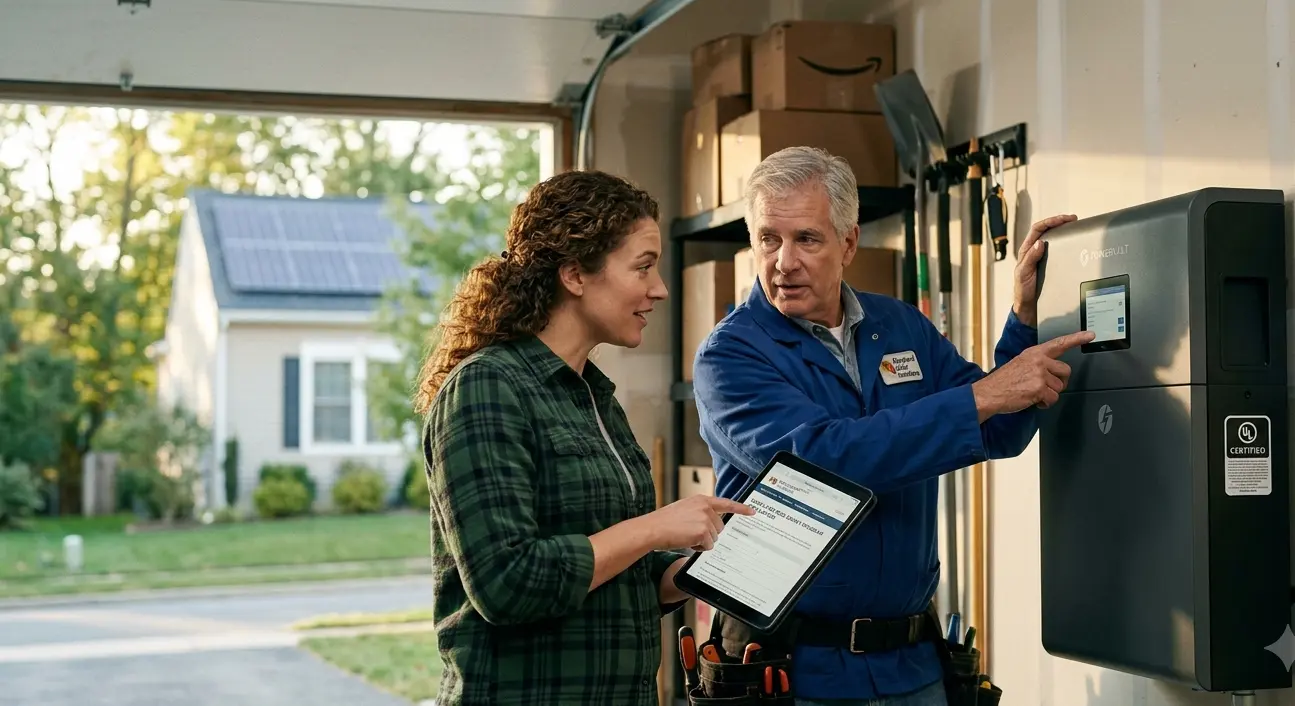
The Residential and Commercial Energy Storage (RCES) Grant Program launched in fiscal year 2026 with a total budget of $2 million. It covers part of the cost of buying and installing a grid-connected battery storage system, whether or not it’s paired with solar panels.
What Residential & Commercial Owners Can Get?
Residential homeowners can receive rebates of up to $5,000. Commercial properties qualify for substantially higher amounts based on system size. To be eligible, your battery system needs to be UL-certified and installed by a licensed professional.
What Is The Deadline To Submit Application?
The current application cycle has closed, and a new fiscal year round is expected to open in summer 2026.
Note: As Pennsylvania’s net metering situation shows, export credit rates aren’t guaranteed to stay favorable forever. A battery lets you store your own solar production and use it yourself during evening peak hours, rather than depending entirely on the utility crediting you fairly for what you send back to the grid. Pairing solar with storage is increasingly the more resilient long-term strategy, even in states like Maryland, where net metering is currently strong.
What Does Virginia’s New Solar Consumer Protection Law Require?
If you’re buying solar in Virginia in 2026, there’s a new law that directly affects you. HB 1439/SB 823 passed during Virginia’s 2026 legislative session, after a similar version was vetoed back in 2024. It puts real, enforceable rules around how residential and commercial solar is sold in the state, specifically to protect homeowners from predatory sales practices.
What Are Requirements For This Law?
Solar companies must provide you with a standardized consumer disclosure form before you sign a contract, not buried in fine print afterward, but clearly presented and reviewed beforehand. That disclosure has to lay out the system’s specifications, the full cost, and your financing terms in simple language. The intent is straightforward: you should know exactly what you’re agreeing to, in writing, before you commit.
Importance Of This Law
The residential solar industry nationally has had real, well-documented problems with high-pressure sales tactics, including inflated savings projections, financing terms that aren’t clearly explained until after a contract is signed, and confusion about who actually owns the system in a lease or PPA. This law gives Virginia homeowners a concrete, legal checkpoint to catch those issues before they become a problem.
If an installer seems to be rushing you past this step or can’t produce the form when asked, treat that as a red flag; the law exists specifically because that kind of pressure has been a problem before.
Virginia passed several related bills in the same 2026 session: a Smart Rooftop Permitting platform (HB 590/SB 382) that’s meant to speed up the permitting process, and a new law legalizing small “balcony” or plug-in solar devices (HB 395/SB 250) for renters and apartment dwellers, taking effect for consumer use starting July 1, 2026. Together, these signal a state actively trying to make solar both more accessible and safer to shop for.
Can You Get a Tax Credit for Joining Community Solar In Virginia?
No, community solar subscribers don’t claim a federal or state tax credit themselves. If you’ve seen marketing that implies otherwise, it’s worth asking the provider directly to clarify.
How Does It Work?
Community (or “shared”) solar lets you subscribe to a share of an off-site solar facility instead of installing panels on your own roof, which is a separate path from EV charger installation if you’re also weighing an EV. You receive bill credits proportional to your share of that facility’s production. This is the right option if you rent, live in a condo, have a shaded or unsuitable roof, or are in an HOA that restricts rooftop panels.
Because you don’t own any equipment, and the developer does, the developer is the one who claims the Section 48E commercial tax credit, not you. A well-run program is supposed to factor that credit into the subscription pricing, passing the value to you indirectly through a lower rate or a better bill-credit percentage. But you personally won’t see a tax credit line item on your return from participating.
Community solar is genuinely one of the more accessible paths to participating in clean energy if rooftop solar isn’t an option for you; just go in with accurate expectations about the tax credit question.
How To Choose the Right Program?
With this much regional detail, it helps to see how it comes together for a specific situation. Here are three common starting points:
● You own your home in Maryland and want to buy it outright.
This is where the region’s incentive stack is strongest. If you’re income-eligible, the Maryland Solar Access Program offers $750/kW up to $7,500 for households at or below 150% of area median income — FY26 funds are nearly exhausted, so ask your installer about the FY27 waitlist opening summer 2026. Layer that with the Residential and Commercial Energy Storage rebate if you’re adding a battery, full retail net metering, and SREC income, especially if your system qualifies for the higher Certified BT rate. Even without the federal credit, this combination meaningfully shortens your payback period compared to going it alone.
● You’re in Virginia, and your main concern is avoiding a bad deal.
Start with HB 1439/SB 823; confirm any installer you’re considering is presenting a proper disclosure form before you sign anything. From there, full retail net metering (up to 100% of your usage) and Virginia’s SREC market still make ownership a solid long-term option once you’re confident in the contract.
● You rent or have a shaded roof in Virginia.
Community solar through Dominion or Appalachian Power is your most realistic path. Just remember: you won’t personally claim a tax credit, but a well-priced subscription should still reflect that value through your bill credits.
What Mistakes Should You Avoid Before Signing a Solar Contract?
● Assuming the federal credit is gone for everyone.
It’s gone for cash and loan buyers, but lease and PPA companies can still use it through 2027, and that should factor into your financing comparison.
● Signing a Virginia contract without confirming the new disclosure form.
If HB 1439/SB 823 protections weren’t part of your sales process, ask why before you sign.
● Forgetting to register for SRECs.
This is genuinely free money left on the table, especially in D.C. and Maryland. Confirm with your solar panel installer that this is part of your setup, not an afterthought.
● Undersizing your solar system.
If an EV or heat pump is even a possibility in the next few years, talk to your installer about sizing for that now, including any system add-on services you might need later. Maryland’s 200%-of-usage allowance gives you real room to do this.
● Waiting too long on Maryland grant deadlines.
Both MSAP and the RCES battery rebate run on first-come, first-served funding. If you’re interested, get your paperwork moving early rather than waiting until the program reopens to start asking questions.
What Should You Do Next?
Here’s a simple checklist to work through before you commit to anything:
- Check whether MSAP or RCES funding is currently open in Maryland, and if not, get on the list for the next cycle.
- If you’re in Virginia, confirm any installer you’re considering is following the new HB 1439/SB 823 disclosure requirements.
- Get 2-3 quotes and run the cash vs. lease vs. PPA comparison above using your actual electricity bill, not a generic estimate.
- Ask every solar company directly: who keeps the SRECs, and what’s the realistic annual value where you live?
- If your roof isn’t a good fit, or you rent, look into community solar availability in your area before ruling out solar altogether.
Conclusion
Solar in 2026 isn’t the same deal it was in 2025, but for most homeowners across Maryland, Virginia, and D.C., it’s still a sound long-term decision. The federal credit changed who captures it and how; the state and local programs covered here can meaningfully close that gap, and new consumer protections in Virginia mean you’re shopping in a safer environment than homeowners were just a couple of years ago.
The real risk isn’t that solar stopped making sense; it’s going in with last year’s numbers, or signing with an installer who doesn’t walk you through the math specific to your state, your utility, and your roof. That’s where having the right team matters as much as the incentives themselves.
This is exactly the kind of decision NEDES specializes in. As a Pearl-Certified solar installer serving Maryland, Virginia, and the wider region, the team’s residential solar installation services are built around your actual electricity bill and local program eligibility, not a generic national estimate. It backs every system with a lifetime warranty through Align Solar Protection. Whether you’re weighing cash purchase against a lease, trying to time a Maryland grant cycle, or just want a straight answer on what your payback period really looks like in 2026, their team will walk you through it line by line before you sign anything.
Ready to see your real numbers? Get a free solar consultation from NEDES and find out exactly what solar looks like for your home in 2026.
Frequently Asked Questions
Is solar still worth it in 2026 without the tax credit?
Yes, for most homeowners in Maryland, Virginia, and D.C. The federal residential tax credit is gone for cash and loan buyers. However, strong net metering policies, SREC income, and state programs like Maryland’s Solar Access Program and battery storage rebate can still make ownership pay off within 9-12 years. Lease and PPA options remain attractive too, since those companies still access a 30% federal credit through 2027.
What is an SREC, and how much is it worth in DC vs. Maryland vs. Pennsylvania?
An SREC (Solar Renewable Energy Certificate) represents proof that you generated one megawatt-hour of solar electricity, which you can sell to utilities needing to meet renewable energy mandates. As of 2026, D.C. SRECs trade around $367-383 each (the highest in the country), Maryland SRECs trade around $40 (or $57.50 for Certified BT systems), and Pennsylvania SRECs trade around $22.50.
How much is the Maryland battery storage rebate?
Through the Residential and Commercial Energy Storage (RCES) Grant Program, Maryland homeowners can receive rebates up to $5,000 toward a qualifying battery storage system. Applications require a signed installation contract first, then a two-step process through the Maryland Energy Administration.
How long does it take for solar to pay for itself in Maryland or Virginia?
Without the federal tax credit, most homeowners in this region experience payback periods of roughly 9 to 12 years for cash or loan purchases, depending on system size and electricity usage. Layering in Maryland’s state incentives or strong SREC income can shorten that timeline further.
Leave a Reply
Want to join the discussion?Feel free to contribute!