
5 Best Solar Battery Systems In Virginia
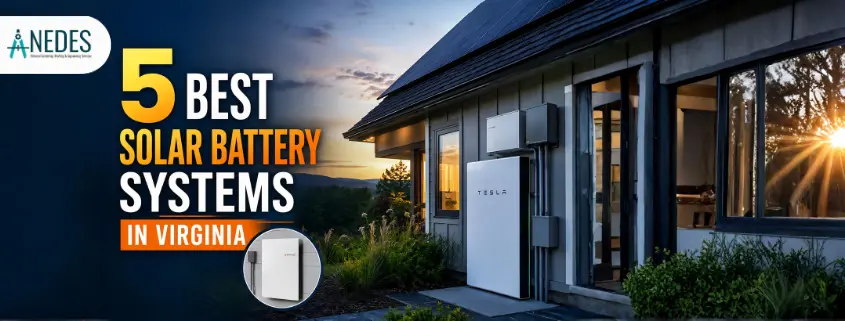
The Virginia power grid is changing, and honestly, it isn’t waiting for you to catch up. But it’s not just about the outages anymore. With utility rates from Dominion Energy and Appalachian Power shifting, the real game is energy independence. You aren’t just looking for a battery. On the contrary, you’re looking for a way to tell the utility company that you’re in charge of your own monthly expenses.
If you’ve already got solar or you’re planning an installation, the battery is the brain of the operation. It’s what turns a nice-to-have green energy project into a bulletproof home battery backup system. We’ve installed countless systems across the Commonwealth, and we know that Virginia’s humidity, temperature swings, and specific net-metering policies require a nuanced choice.
Here is the definitive breakdown of the best solar battery storage Virginia has to offer in 2026.
1. Tesla Powerwall 3: The Integrated Powerhouse
The Tesla Powerwall has become the Kleenex of the industry (the name everyone knows), but the Powerwall 3 is a different beast entirely. It isn’t just a storage unit but a fully integrated solar-and-battery solution.
For Virginia homeowners, the Powerwall 3 is particularly attractive because of its simplified architecture. Unlike its predecessor, it features an integrated solar inverter. This means fewer boxes on your wall and higher efficiency when converting the DC power from your roof into the AC power that runs your fridge and AC.
Why It Wins in Virginia
Virginia’s weather can be erratic. The Powerwall 3’s Storm Watch feature is a literal lifesaver. It automatically tracks NWS alerts and tops off your battery if a severe storm is brewing in the Atlantic or moving across the Piedmont.
As a Tesla Powerwall certified installer, we’ve seen how this system handles high-surge loads. If you have a well pump or a central AC unit that draws a lot of kick-off power, the Powerwall 3’s 11.5kW continuous power output is a massive upgrade over the 5kW limit of older models.
Technical Snapshot: Tesla Powerwall 3
| Feature | Specification |
| Energy Capacity | 13.5 kWh |
| On-Grid Power | 11.5 kW continuous |
| Chemistry | Lithium Iron Phosphate (LFP) |
| Warranty | 10 years |
| Installation | Wall or Floor Mount |
The Value Proposition
The Powerwall 3 is built for the homeowner who wants “set it and forget it” reliability. The app interface is sleek, the aesthetic is minimalist, and because we are a certified partner, your warranty is backed by both the manufacturer and our expert local support.
2. Enphase IQ Battery 5P: The Reliability King
If you are looking for a solar battery backup that refuses to fail, Enphase is your go-to. While other brands might rely on a single large battery, Enphase uses a distributed architecture.
The IQ Battery 5P is the latest evolution, designed to work seamlessly with Enphase microinverters. In Virginia, where we often deal with partial shading from our beautiful (but annoying) oak and maple trees, microinverters are already the gold standard. Adding the 5P battery keeps the ‘no single point of failure’ philosophy alive.
Why It Wins in Virginia
Most batteries have a 10-year warranty. Enphase stepped up to a 15-year limited warranty. In a state where we value long-term investments and doing it right the first time, that extra five years of guaranteed life is a huge peace of mind.
- Powerful Performance: Despite being smaller (5 kWh per unit), it packs a punch. It can deliver 3.84 kW of continuous power and 7.68 kW of peak power for 3 seconds.
- Safe Chemistry: It uses Lithium Iron Phosphate (LFP), which is significantly more stable than the older nickel-based chemistries found in some competitors. No thermal runaway worries here.
- Modular Scaling: Want more storage? Just stack them. You can start with 5 kWh and grow to 40 kWh as your budget or family needs change.
Who is this for?
This is for the data-obsessed homeowner. If you want to see exactly how much energy your toaster is pulling in real-time and want the most granular control over your clean energy storage, Enphase is the winner.
3. FranklinWH: The Whole-Home Heavyweight
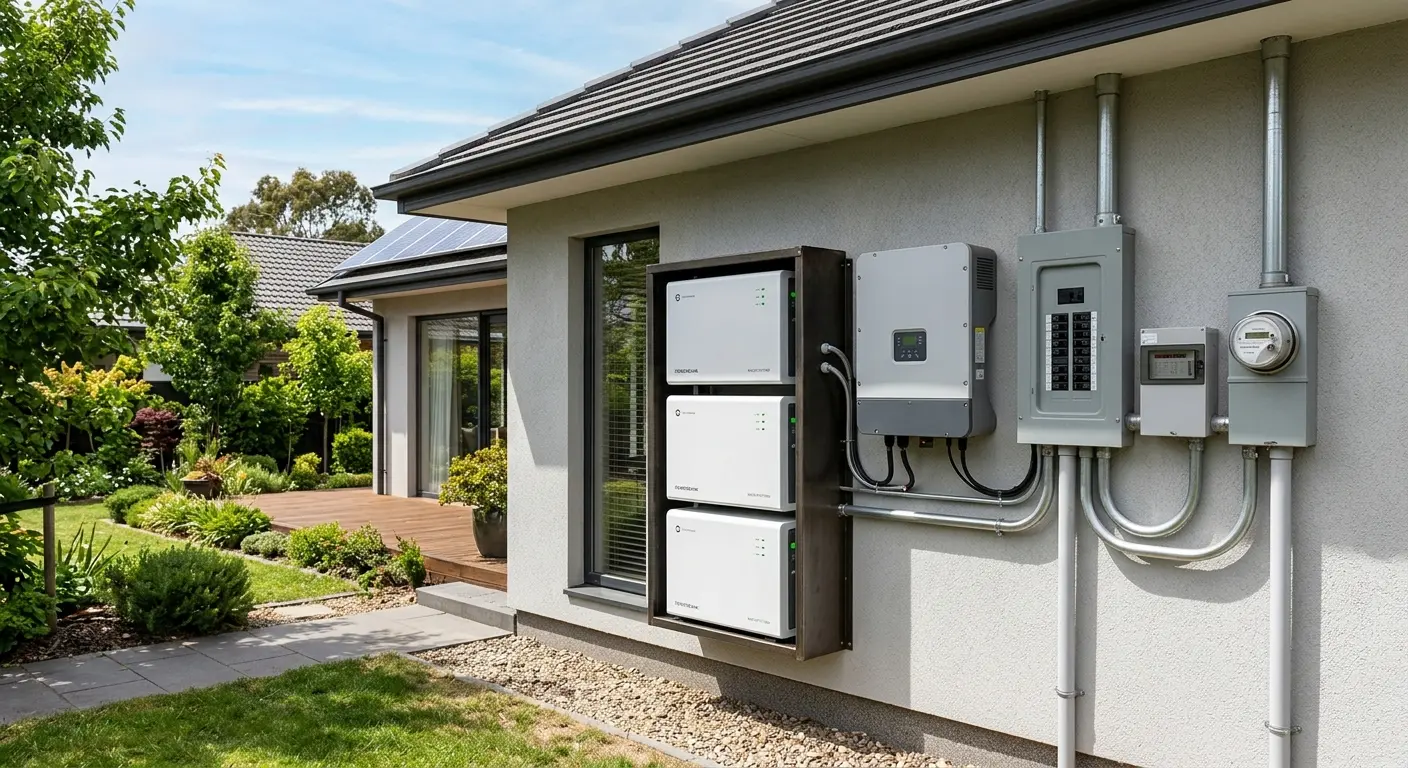
A lot of people talk about whole home battery backup, but few systems actually deliver it without forcing you to pick and choose which circuits to keep on. That’s where FranklinWH (Whole Home) jumps in!
The Franklin Home Power (FHP) system is a high-performance, integrated home energy management system. It’s designed to manage not just your solar and battery, but also your generator and the grid itself.
Why It Wins in Virginia
Virginia has a high concentration of homes with heavy electric loads. Electric vehicle chargers, heat pumps, and large kitchens each adds its own share. The FranklinWH system can handle up to 15 circuits with its smart gate technology.
- Massive Surge Capacity: It can handle the massive in-rush current needed to start a 5-ton AC unit during a humid Richmond July.
- Generator Integration: Many Virginia homes already have a standby Generac or Kohler generator. FranklinWH is one of the few systems that can “handshake” with your existing generator, creating a triple-threat of power: Solar + Battery + Generator.
Technical Snapshot: FranklinWH
| Feature | Specification |
| Usable Capacity | 13.6 kWh per unit |
| Continuous Power | 5 kW |
| Peak Power | 10 kW (10 seconds) |
| Interconnectivity | Solar, Grid, Generator, and Battery |
Ready to see if your roof is a candidate for total energy independence? We offer a free site inspection to map out your home’s electrical load and design a system that keeps your lights on while the rest of the neighborhood goes dark.
4. Generac PWRcell: The Modular Storage Specialist
Generac isn’t just the generator company anymore. They’ve taken their decades of experience in emergency power backup and poured it into the PWRcell system.
The PWRcell is a DC-coupled system, which means the energy goes from your panels to your battery without multiple conversions. This results in higher round-trip efficiency, meaning you keep more of the power you actually generate.
Why It Wins in Virginia
The modularity of the PWRcell is its biggest selling point. You don’t have to buy a massive 13kWh battery if you don’t need it. The system uses Battery Modules that fit into a single cabinet.
- Scale as You Go: Start with three modules (9 kWh) and expand to six (18 kWh) in the same cabinet as your needs grow.
- The EX Modules: Their latest modules are designed for extreme cold. If you live in the Shenandoah Valley, you know that batteries hate the cold. Generac’s hardware is built to maintain performance even when the mercury drops.
The Power of Integration
Because Generac is a household name in Virginia, parts and service are never an issue. It’s a robust, American-made feel that appeals to homeowners who want a residential battery backup system backed by a company that’s been around for 60 years.
5. HomeGrid Stack’d: The High-Voltage Elite
For those looking for off-grid battery systems or the absolute peak of lithium-ion technology, HomeGrid is making waves. The Stack’d series is exactly what it sounds like: a series of battery modules that click together like Legos.
Why It Wins in Virginia
High-voltage systems like HomeGrid are incredibly efficient at running large loads. In Virginia, where all-electric homes are becoming more common in new developments, having a high-voltage backbone is a major advantage.
- Unrivaled Power: A single stack can put out up to 14.4 kW of continuous power. That is enough to run your entire house (dryer, stove, and AC included) without breaking a sweat.
- User-Replaceable Parts: Unlike some “black box” batteries where a single failure means replacing the whole unit, HomeGrid is designed so that individual modules can be swapped or added in minutes.
- Cobalt-Free: Using LFP (Lithium Iron Phosphate) makes it one of the safest lithium-ion solar batteries on the market today.
The Virginia Context: Why “Solar Plus Storage” is Non-Negotiable in 2026
We get asked all the time: “Can’t I just get solar panels and call it a day?” The short answer in Virginia is: You can, but you shouldn’t.
In the old days of simple net metering, the grid acted like your battery. You’d send extra power to Dominion, and they’d give you a credit. But as the grid becomes more stressed and utility companies change how they value that exported power, having your own solar energy backup systems becomes a financial necessity.
Avoiding the Grid-Down Solar Trap
One of the biggest misconceptions in Virginia is that solar panels work during a blackout. They don’t. For safety reasons, standard grid-tied solar systems shut off during an outage to prevent back-feeding the lines while crews are working. Without a solar backup battery, you are just as dark as your neighbor who doesn’t have panels.
Adding a battery allows your system to island. It creates a tiny, private power grid for your home, keeping your solar panels active and your food frozen while the utility company scrambles to fix a downed line on Route 1.
Book Your Free Consultation Now
Designing Your System: What Actually Matters?
When we sit down for a free consultation session, we don’t just talk about brands. We talk about behavior. A solar plus storage solution is only as good as the math behind it.
Capacity vs. Power
- Capacity (kWh): This is the size of your gas tank. It’s how much energy you can store. If you want to run your lights for 48 hours, you need high capacity.
- Power (kW): This is the size of your engine. It’s how much energy you can pull out at once. If you want to run your microwave while the AC is on, you need high power.
In Virginia, we usually recommend a balance. You need enough power to handle the humidity-busting HVAC systems, but enough capacity to survive a multi-day outage after a summer thunderstorm.
LFP vs. NMC Chemistry
You’ll see a lot of technical jargon about lithium-ion solar batteries. Today, the industry is moving toward LFP (Lithium Iron Phosphate). It’s slightly heavier, but it lasts longer and is significantly safer. Every system we recommend above (from the Tesla Powerwall 3 to the Franklin WH) uses this superior chemistry. It’s better for the environment, and better for your home’s safety.
Why Virginia Homeowners are Pivoting
In Virginia, the conversation around solar battery storage has shifted from “Is it cool?” to “What’s the ROI?” As we move through 2026, the financial landscape for energy in the Commonwealth is undergoing a quiet revolution. With Dominion Energy and Appalachian Power continually adjusting their rate structures, the hidden value of a home battery backup is becoming impossible to ignore.
For years, net metering was the primary driver for solar. You’d send your excess power to the grid during the day and pull it back at night for a one-to-one credit. But “Net Metering 2.0” and the push toward time-of-use (TOU) rates are changing the math. In a TOU scenario, the electricity you pull from the grid at 6:00 PM (when you’re cooking dinner and running the dishwasher) is significantly more expensive than the power you generate at 11:00 AM.
A solar backup battery system allows you to engage in rate arbitrage. You store your cheap, self-generated mid-day sun and use it during those expensive evening peaks. You’re essentially shorting the utility company.
The Financial Safety Net: Incentives and Credits in 2026
The sticker price of a residential battery backup system can be intimidating, but the net cost is often 30% to 50% lower once you factor in the modern incentive stack.
1. Virginia Real Estate Tax Exemptions
Many jurisdictions in Virginia (from Loudoun County to Virginia Beach) offer a local property tax exemption for solar and energy storage equipment. This ensures that while your home value increases because you’ve added renewable energy storage, your tax bill doesn’t skyrocket along with it.
2. SRECs (Solar Renewable Energy Certificates)
While SRECs are primarily tied to production, having a battery allows you to optimize your system’s performance, ensuring you are capturing and utilizing every possible kilowatt-hour your roof produces, which indirectly maximizes your long-term SREC gains.
Choosing Your Setup: AC vs. DC Coupling
If you’re researching battery backup for solar panels, you’ll likely stumble across the AC vs. DC debate. It sounds like a high-school physics nightmare, but it matters for your efficiency.
- DC Coupling (Direct Current): Systems like the Generac PWRcell keep the energy in DC form from the panels to the battery. It’s highly efficient because you avoid “conversion losses.”
- AC Coupling (Alternating Current): Systems like the Tesla Powerwall Virginia homeowners love are often AC-coupled. This makes them incredibly easy to retrofit onto existing solar arrays. If you already have panels and want to add a battery, AC-coupled is usually the way to go.
What Does the Installation Journey Look Like?
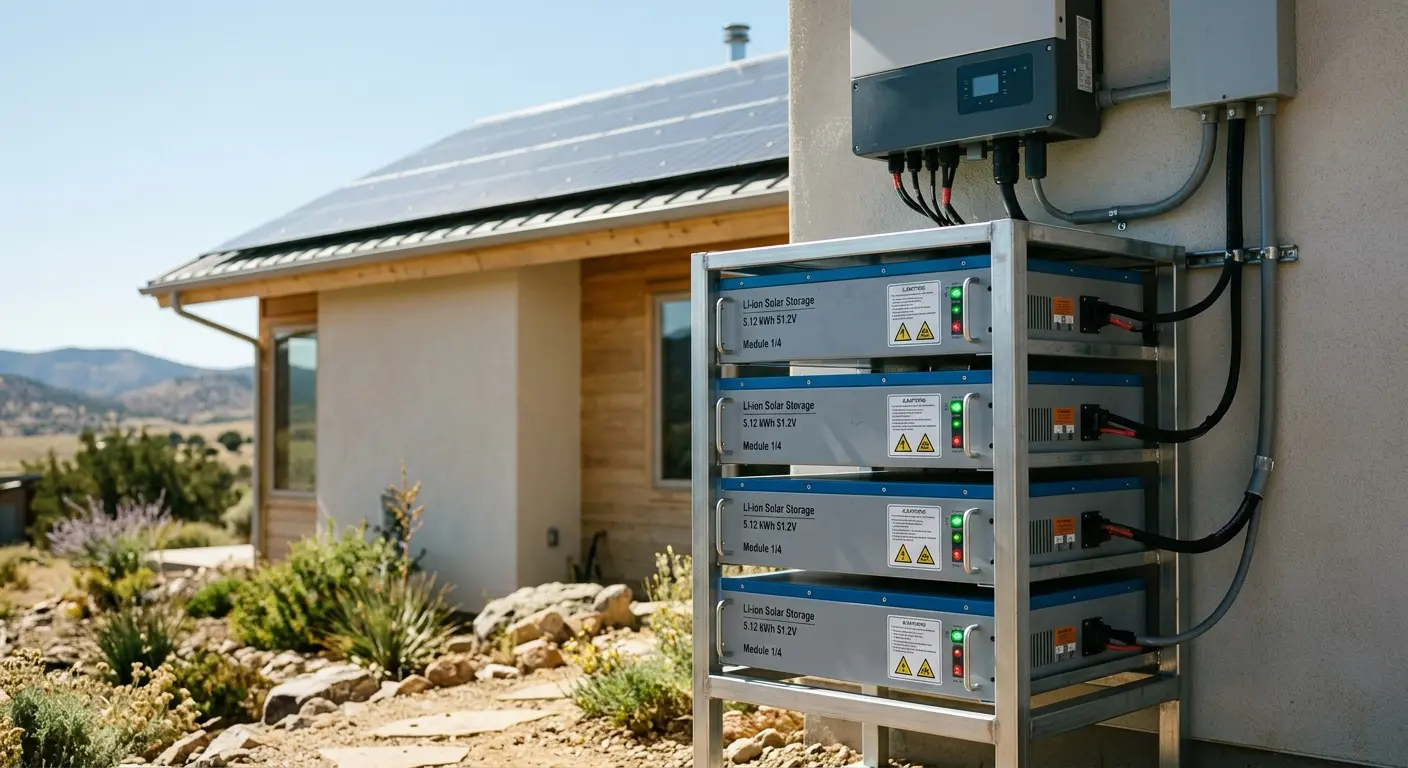
We don’t just show up and bolt a box to your wall. A professional solar battery installation Virginia requires a surgical approach to your home’s electrical anatomy.
- The Load Audit: We don’t guess. We analyze your past 12 months of utility bills and perform a Free Site Inspection. We look at your heavy hitters (your HVAC, your well pump, and your EV charger.
- The Design Phase: This is where we decide if you need a “Partial Home Backup” (critical loads like the fridge, lights, and Wi-Fi) or a “Whole Home Backup” (where you can run the whole house as if nothing happened).
- Permitting and Interconnection: Virginia has specific electrical codes that vary by county. Whether you are in Fairfax, Henrico, or Roanoke, we handle the mountain of paperwork required to get your system “interconnected” with the local grid.
- The Physical Install: Our crew installs the battery, the gateway (the “brain”), and the critical loads panel.
- The “Cloud” Connection: We sync your system to your phone. You’ll be able to watch your house “go green” in real-time.
Stop wondering “what if” during the next storm. Schedule a free consultation session with our team today. We’ll walk through your electrical panel and show you exactly how a battery fits into your home’s ecosystem.
Comparative Analysis: 2026 Top Battery Systems
| System | Best For… | Efficiency | Scalability |
| Tesla Powerwall 3 | Integration & User Experience | 90% | High (up to 4 units) |
| Enphase IQ 5P | Reliability & Long Warranty | 89% | Extreme (modular 5kWh units) |
| FranklinWH | Heavy Loads & Generator Users | 89% | Medium (up to 3 units) |
| Generac PWRcell | Efficiency in Cold Climates | 96% (DC) | High (within cabinet) |
| HomeGrid Stack’d | Off-Grid & High Power Needs | 93% | High (stackable) |
The Tesla Advantage in Virginia
As a Tesla Powerwall certified installer, we have a front-row seat to how these systems perform in the humid, variable climate of the Mid-Atlantic. The Powerwall 3 isn’t just popular because of the brand; it’s popular because of the software and its compatibility with Tesla Solar Roof.
The Self-Powered mode is a game-changer for Virginia residents. It prioritizes using your stored solar energy at night, minimizing your reliance on the grid to almost zero during the sunnier months. And because we are certified, your installation meets the stringent technical standards required by Tesla to maintain your 10-year warranty.
Smart Home Synergy
A modern solar battery backup isn’t just a dumb battery. It’s a node in your smart home energy system. In 2026, these batteries talk to your smart thermostat and your electric vehicle.
Imagine this: A storm is coming. Your Tesla Powerwall Virginia system detects the NWS alert via “Storm Watch.” It automatically tells your smart thermostat to pre-cool the house by two degrees while the grid is still up. It pauses your EV charging to save capacity. If the power goes out, your home is already optimized to last as long as possible on battery power. That is the level of sophistication we are bringing to Virginia homes.
Environmental Impact: The Chesapeake Bay Connection
Choosing clean energy storage isn’t just a selfish act of self-preservation; it’s a community-wide win. Virginia’s grid is still heavily reliant on natural gas and aging infrastructure. Every time you pull power from your lithium ion solar batteries instead of the grid during peak hours, you are reducing the “peaker plant” demand.
These peaker plants are often the dirtiest and most inefficient. By reducing the load on the grid, you’re playing a direct role in protecting our local environment, from the Blue Ridge Mountains to the fragile ecosystems of the Chesapeake Bay. It’s renewable energy storage with a purpose.
Maintenance: Is There Any?
One of the best things about battery storage technology in 2026 is that it is virtually maintenance-free. Unlike a gas generator, there are no spark plugs to change, no oil to check, and no fuel to store (which can go bad or attract pests).
Your only maintenance is checking your app occasionally to ensure the firmware is updated (which usually happens automatically) and keeping the area around the battery clear of debris. These systems are designed to live in your garage or on the side of your house for 15+ years without you ever having to lift a wrench.
Is Solar Battery Backup Worth It?
If you value certainty, the answer is a resounding yes. In Virginia, we aren’t just fighting the weather; we’re fighting rising utility costs and an aging grid. A home battery backup is the final piece of the puzzle that makes your solar panels actually work for you, not just the utility company. You gain a silent, powerful guardian that sits in your garage, ready to take over in a millisecond.
Whether you want the sleek integration of a Tesla Powerwall installation or the rugged, generator-matching power of a FranklinWH, the technology has finally caught up to the promise. You can own your power. You can protect your family. And you can do it while saving money.
Conclusion
Investing in the best solar battery backup systems in Virginia is about more than just surviving a blackout; it’s about taking total control of your energy future. Between the 30% federal tax credit and the rapid advancement in battery storage technology, there has never been a more financially sound time to go off-grid, even while staying connected.
As a Tesla Powerwall certified installer, we specialize in turning Virginia homes into self-sustaining power plants. Don’t let the next storm catch you in the dark. Secure your energy independence today and enjoy the peace of mind you deserve.
Frequently Asked Questions
1. How much does a solar battery backup cost in Virginia?
Typically, systems range from $10,000 to $20,000 before incentives. However, the 30% federal tax credit significantly reduces this, often bringing the net cost down by several thousand dollars.
2. Will a solar battery run my air conditioner?
Yes, but it depends on the battery’s power output. Systems like the Tesla Powerwall 3 or FranklinWH are designed to handle the high-surge “kick” required to start large HVAC units.
3. Does Virginia have a battery rebate program?
While there isn’t a statewide “cash rebate,” many Virginia homeowners benefit from property tax exemptions and the 30% federal ITC, making solar battery storage Virginia projects highly affordable.
4. How long will a 13.5kWh battery last during an outage?
For a typical Virginia home, it can power “critical loads” (lights, fridge, Wi-Fi) for about 24 hours. With consistent daily sunshine recharging the battery, you can last indefinitely.
5. Can I add a battery to my existing solar panels?
Absolutely. Using AC-coupling technology, we can retroactively install a home battery backup to almost any existing solar array, regardless of who originally installed your panels years ago.
6. Is a Tesla Powerwall better than a generator?
Unlike generators, Powerwalls are silent, require zero fuel, and provide “instant-on” power. They also save you money daily by storing solar energy, whereas generators only provide value during outages.
7. What is the lifespan of a lithium-ion solar battery?
Most modern lithium ion solar batteries are rated for 10 to 15 years. They don’t “die” suddenly; they slowly lose capacity over time, much like a smartphone battery would.
8. Do I need internet for my solar battery to work?
While the battery will still provide backup power without internet, a connection is required for monitoring, firmware updates, and smart features like Tesla’s “Storm Watch” to function correctly.