
Delaware Solar Panel Cost in 2026
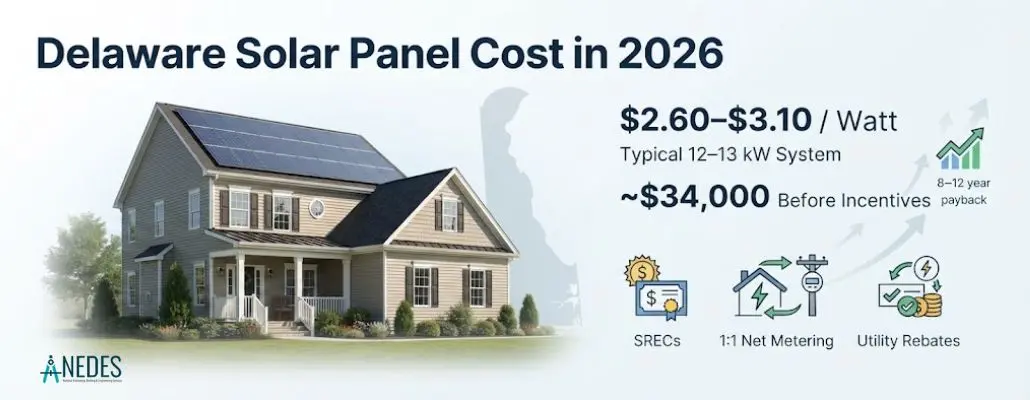
| Solar panels in Delaware cost $2.60 to $3.10 per watt in 2026, or about $34,000 before incentives for a typical 13 kW system. Between SRECs, uncapped net metering, and utility rebates, most homeowners recover that cost in 8 to 12 years, even though the 30% federal tax credit expired for cash and loan purchases in January 2026. |
If you’ve searched “solar panel cost Delaware” recently, you’ve probably found numbers that don’t agree with each other, and some pages still mention a tax credit that no longer applies. Here’s the current picture.
How Much Do Solar Panels Cost in Delaware in 2026?
As of August 2026, Delaware homeowners pay roughly $2.60 to $3.10 per watt installed. The average home needs a system around 12 to 13 kilowatts (kW), which puts the typical pre-incentive price at about $34,000.
Smaller systems cost less overall but more per watt, since fixed costs like permitting and labor don’t shrink much with system size.
| System Size | Approx. Cost (before incentives) |
| 5 kW | ~$13,000 to $15,500 |
| 8 kW | ~$21,000 to $24,500 |
| 10 kW | ~$26,000 to $30,500 |
| 13 kW | ~$34,000 to $39,500 |
Note: Your final quote depends on your panel brand, roof shape, chosen installer, and permitting fees, which can vary by Delaware county.
What Affects the Cost of Solar Panels in Delaware?
Your price mainly comes down to equipment quality, roof condition, installer overhead, and whether you add battery storage.
- Panel brands: SunPower Maxeon, REC, and Panasonic cost 15% to 20% more than mid-range options like Qcells or Canadian Solar, but carry efficiency ratings above 22 percent and hold up better in low light.
- REC Alpha Pure-RX: A common pick specifically for Delaware’s cloudier days, since its HJT cell technology loses less output than standard panels.
- Inverter: Enphase microinverters carry a 25-year warranty and handle roof shading well; SolarEdge’s optimizer systems typically ship with a 12-year standard warranty unless you pay to extend it.
- Roof Complexity: Steep roofs, multiple roof levels, or obstructions like chimneys add labor time.
- Installer Type: National installers sometimes offer lower equipment prices through bulk buying, while NEDES and other local Delaware installers can beat them on labor cost and response time.
- System Size: A monthly bill above 1,000 kWh, or an EV at home, usually pushes the recommended system toward 10 to 15 kW.
Getting two or three quotes remains the simplest way to avoid overpaying.
Is the Federal Solar Tax Credit Still Available in Delaware?
No. The 30% federal residential solar tax credit expired for cash and loan purchases completed after December 31, 2025, under Public Law 119-21.
If you’re buying your system outright or financing it with a loan, that federal discount is no longer part of the math. Homeowners who choose a solar lease or power purchase agreement, known as a PPA, may still see some savings indirectly. The leasing company, not the homeowner, can claim a separate business side credit and sometimes passes part of it through in the monthly rate.
What New Solar Laws Did Delaware Pass in 2026?
Delaware passed two solar laws in 2026 that directly affect homeowners, Senate Bill 239 and House Bill 269.
Senate Bill 239: Net Metering Cap Removed
Signed June 10, 2026, SB 239 removed the state’s 8% net metering cap, which previously let utilities stop accepting new solar customers once an area hit that limit.
House Bill 269: Faster Grid Interconnection
Signed May 21, 2026, HB 269 requires Delaware utilities, including Delmarva Power, Delaware Electric Cooperative, and DEMEC, to modernize solar interconnection processing for fewer delays before your system switches on.
What Solar Incentives Does Delaware Offer Homeowners?
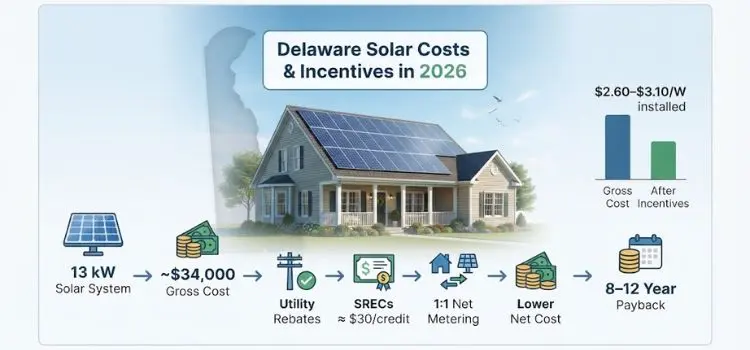
Delaware still offers four incentives worth claiming, SRECs, uncapped net metering, utility rebates, and low-cost state financing.
- SRECs: Solar Renewable Energy Certificates pay you for every 1,000 kWh your system produces. Real prices come from Energize Delaware’s yearly bid auction, often around $30 per SREC for the first ten years, then a flat $10 for fifteen more, through the SRECDelaware Program.
- Net Metering: Now credits your exported solar power at a full 1:1 rate with no statewide cap.
- Utility Rebates: The Green Energy Program pays roughly $0.50 to $1.00 per watt depending on whether you’re a Delmarva Power, Delaware Electric Cooperative, or municipal electric customer, capped at a few thousand dollars.
- State Financing: Energize Delaware runs a Residential Solar Loan Program and a Low to Moderate Income Solar Pilot Program for more accessible financing.
- No Sales Tax: Delaware has no state sales tax, so solar equipment isn’t taxed like it is elsewhere.
How Much Can a Delaware Homeowner Actually Save on Solar?
A typical 8 kW system in a city like Wilmington, Newark, or Dover costs around $22,000 before incentives, and most homeowners recover that cost within 8 to 12 years.
Here’s the math behind that estimate for an 8 kW system:
- Gross cost: 8,000 watts × $2.75 per watt, Delaware’s mid-range rate, is about $22,000.
- Utility rebate: 8,000 watts × $0.70 per watt through Delmarva Power’s Green Energy Program is $5,600, which brings the net cost down to about $16,400.
- Annual production: 8 kW × roughly 1,300 kWh per kW per year is about 10,400 kWh produced annually.
- Electricity savings: 10,400 kWh × Delaware’s average residential rate of about $0.17 per kWh is roughly $1,770 saved per year.
- SREC income: 8 kW × about 1.35 SRECs per kW per year is roughly 11 SRECs annually, worth about $325 per year at $30 per SREC.
- Payback: $16,400 net cost divided by about $2,095 in combined annual savings comes out to roughly 8 years for this example, closer to 12 years for homeowners without a rebate or with a lower usage system.
After a utility rebate and several years of SREC income, the effective cost drops well below the sticker price. Panels typically last 25 to 30 years, so most homeowners get 15 to 20 years of near free electricity after payback.
Get an accurate 2026 Delaware solar quote based on your roof, energy use, and available incentives.
Is Solar Still Worth It in Delaware in 2026?
Yes, solar is still worth it in Delaware in 2026, though the payback math takes a bit longer without the federal credit.
Delaware gets around 200 sunny days a year, electricity rates have been climbing, and SRECs, uncapped net metering, and utility rebates together can still recover a large share of the upfront cost. Claiming every available state and utility incentive matters more now than it did when the federal credit was still in place. Solar panels can also raise home resale value by an estimated three to four percent, adding another layer of return beyond monthly savings.
What Else Should You Consider Before Going Solar in Delaware?
Beyond price, think through battery storage, permitting timelines, and what happens if you sell your home. Battery backup adds $8,000 to $15,000 depending on capacity, and more homeowners are adding it given Delaware’s coastal storms. Permitting timelines vary by county. New Castle, Kent, and Sussex each handle applications a little differently, so ask your installer for a realistic estimate. If you financed your system with a loan, it typically needs to be paid off or transferred at sale. Leased systems usually transfer to the new owner with less hassle.
FAQs
How much do solar panels cost in Delaware in 2026?
Delaware solar costs $2.60 to $3.10 per watt installed in 2026. A typical 12 to 13 kW home system runs about $34,000 before any incentives, rebates, or SREC income are applied.
What is Delaware’s average cost per watt for solar?
As of August 2026, Delaware’s average cost is $2.60 to $3.10 per watt, slightly below the national average, depending on your installer, panel brand, and whether you add battery storage.
Is the federal solar tax credit still available in Delaware?
No. The 30% federal residential credit expired for cash and loan purchases completed after December 31, 2025, under Public Law 119-21. Leases and PPAs may still offer indirect savings.
Did Delaware’s net metering rules get worse in 2026?
No, they actually improved. Senate Bill 239, signed June 10, 2026, removed the state’s old 8% net metering cap, so more Delaware homeowners can now qualify for full 1:1 credit.
Do I need a big system to make solar worth it?
Not necessarily. A properly sized system matching your actual electricity usage usually returns more than an oversized one bought “just in case,” since extra capacity adds cost without proportional savings.
How long is the payback period for solar in Delaware?
Most Delaware homeowners recover their solar investment in 8 to 12 years, depending on system size, utility rebates, and SREC income. Panels typically keep producing for 25 to 30 years total.
How much are Delaware SRECs actually worth?
Real SREC prices come from Energize Delaware’s yearly bid auction through the SRECDelaware Program, often around $30 per certificate for the first ten years, then a flat $10 for fifteen more.
Which Delaware utility offers the best solar rebate?
Delmarva Power’s Green Energy Program rebate runs about $0.70 per watt, up to $6,000. Delaware Electric Cooperative and municipal utilities offer smaller rebates, so check your specific provider’s current rate.
Does Delaware charge sales tax on solar panels?
No. Delaware has no state sales tax at all, so homeowners don’t pay the added equipment tax that many other states charge on solar panels, inverters, and battery storage purchases.
How much does adding a battery cost in Delaware?
Battery backup typically adds $8,000 to $15,000 to a Delaware solar system, depending on capacity. More homeowners are adding storage given the state’s frequent coastal storms and grid outages.
Get an Accurate, Current Quote from NEDES!
Prices, incentives, and even state law have shifted more in the last year than in the previous five combined, which makes it easy to base your decision on outdated numbers. At NEDES, we help Delaware homeowners and businesses cut through that: current 2026 pricing, a clear picture of exactly which state and utility incentives you qualify for, and guidance through permitting in New Castle, Kent, and Sussex counties.
If you’d like a personalized, no pressure estimate based on your actual roof and energy usage, reach out to our team today. We’ll walk you through the real numbers, not the outdated ones still floating around online. Call now!