NEDES designs every Frederick County system around that mixed housing stock, Potomac Edison’s actual billing structure, and a county permitting office that, refreshingly, moves faster than almost anywhere else in the state.
Residential

NEDES designs every Frederick County system around that mixed housing stock, Potomac Edison’s actual billing structure, and a county permitting office that, refreshingly, moves faster than almost anywhere else in the state.
Frederick Municipal Airport sits inside the county, which makes it a cleaner reference point for solar output than borrowing data from Dulles or somewhere thirty miles off. NREL’s PVWatts tool, run against that station’s TMY3 weather record, puts the county at roughly 4.5 peak sun hours a day. A 9 kW system at that output produces somewhere around 11,750 kWh annually after inverter and wiring losses, enough to fully offset most Frederick County households pulling 10,500–12,000 kWh a year.
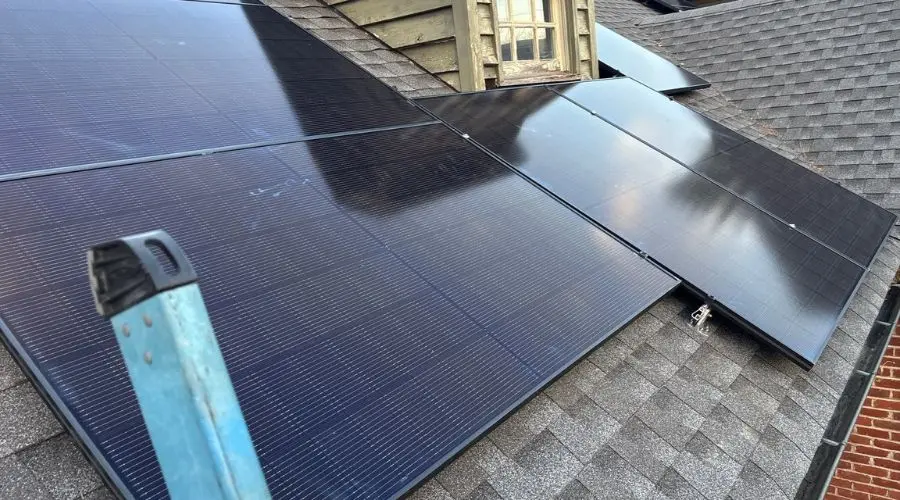
Potomac Edison, a FirstEnergy subsidiary, is the utility across nearly all of Frederick County. Its last full rate case closed in October 2023, and current residential rates run in the 11–12 cents per kWh range. That’s not a reason to skip solar; it’s a reason to look at the payback math honestly instead of leaning on inflated urgency. Rate cases happen on a cycle, and FirstEnergy has filed increases in most of its other territories in recent years. A system installed now locks in your generation cost before the next filing changes the comparison.
Here’s the part some Maryland solar pages still get wrong: the 30% federal Residential Clean Energy Credit, Section 25D, expired for any system placed in service after December 31, 2025. A Frederick County homeowner buying with cash or a loan in 2026 claims $0 on that credit. A lease or PPA is the only structure that still touches the 30% figure, and even then indirectly; the third-party system owner claims the commercial Section 48E credit and typically passes part of that value through as a lower monthly rate, rather than the homeowner filing for it directly.
Property tax exemption first: Maryland Tax-Property Article § 9-203 keeps the added value of your solar system out of your assessment entirely. On a $26,500 system (roughly the state average for a 9 kW install before incentives), that’s real value protected every year you own the home. Sales tax next: solar equipment is exempt from Maryland’s 6% state sales and use tax under Tax-General Article § 11-230. On that same $26,500 system, that’s $1,590 you don’t pay at the register, no waiting period required.
The Maryland Solar Access Program pays $750 per kW of installed capacity, up to $7,500, for income-qualified homeowners (at or below 150% of Maryland’s Area Median Income). The program exists precisely because the state anticipated the federal credit’s expiration. The FY26 budget closed fully reserved earlier this year, but FY27 opened for new applications on July 29, 2026, with a deadline of May 31, 2027 or whenever funds run out first, whichever comes first. Check current availability with MEA before counting on a specific dollar figure.
Maryland requires full retail-rate net metering under Public Utilities Article § 7-306, and Potomac Edison credits every exported kWh at that rate, month to month. The default annual true-up lands in April, where any leftover credit balance gets cashed out at a lower avoided-cost rate rather than full retail. Since 2023’s SB 143, though, customers of investor-owned utilities (Potomac Edison included) can elect indefinite rollover instead, carrying banked credit forward rather than losing value at the April reset. It’s a genuinely useful option almost nobody mentions, and we set it up as part of your interconnection paperwork.
Maryland Real Property Code § 2-119 voids any HOA covenant that imposes unreasonable restrictions on solar installation. Your HOA can still require standard architectural review (panel placement, visible conduit, that kind of thing), but it cannot refuse solar as a category or impose conditions that substantially raise your cost or cut your output.
Frederick County’s Department of Permits and Inspections handles every one of these applications, and its staff performs same-day intake review on rooftop solar submissions; most residential permits clear in 3 to 5 business days, among the fastest turnarounds anywhere in Maryland. Frederick County Bill #17-07 also allows Accessory Solar Facilities by right in every zoning district, which removes a layer of review some other counties still require.
We size every system against twelve months of actual Potomac Edison usage, not a rule-of-thumb estimate. Older farmhouse roofs common in the Middletown and Woodsboro areas often need a structural assessment before layout; mismatched rafter spacing and older shingle profiles aren't unusual out here, and we check for both before finalizing a design.
Read More
Commercial systems move through Frederick County's standard commercial plan review, separate from the residential fast-track. We design around Potomac Edison's commercial rate schedule and structure ownership to preserve access to the 30% Section 48E federal credit, which remains available for commercial systems through December 2027 under current construction-start timing rules.
Read More
Most Level 2 charger installs are electrical-permit-only. We check panel capacity for a dedicated 240-volt, 40- to 50-amp circuit before scheduling anything. Older homes in Brunswick and Thurmont sometimes need a subpanel upgrade first.
Read More
If your usage has grown (an EV, a heat pump, a finished basement with a home office), we can often extend an existing array rather than replace it. We check your inverter's remaining headroom and how close you already sit to Maryland's net metering cap of 200% of baseline annual usage.
Read More
Roof replacement is the most common reason we get called back to a system we didn't originally install. We pull the array, store it safely on-site, and put it back once the roofer's done, without disturbing the racking warranty.
Read More
Fast and Furious Installation
Our Frederick County solar installation process is built around four clear steps: reviewing your actual energy use and roof, completing the county permit process, installing the system, and handling Potomac Edison interconnection through activation.
We start with twelve months of real Potomac Edison billing history, not a national estimate. A site visit follows, checking roof condition, shading, and structural specifics, which matters more here than in newer-build counties, given how many older roof types are still in service across Frederick County.
Frederick County’s Department of Permits and Inspections performs same-day intake review on rooftop solar applications and typically issues residential permits within 3 to 5 business days; straightforward installs often clear faster. The county has deliberately kept this process in-house rather than adopting a one-size-fits-all automated system, and the turnaround speaks for itself.
Most residential installs take one to two days on the roof. Frederick County requires a final inspection before your system can be energized, and we schedule and attend it as part of the job.
Once the county signs off, we file your Potomac Edison interconnection application through their online portal. Once approved, net metering activates, and your system starts earning full retail credit and building toward that first SREC payout.
NEDES: The Leading Solar Company
Most Frederick County homeowners end up choosing between a subcontracted crew booked through a lead-generation site, an installer bidding through a national marketplace, or a company that owns the whole process. Here’s where the real difference shows up.
| Features | Other Local Installers | NEDES |
|---|---|---|
| Workmanship Warranty | 1–10 years (EnergySage marketplace standard) | 25 years |
| Response Time | Days to weeks | Under 24 hours |
| Production Monitoring | App, sometimes extra cost | Included, real-time |
| Financing Options | Cash or loan only | Cash, loan, or lease/PPA |
| Services Systems It Didn't Install | Rarely, or refuses outright | Yes — stated policy |
| Point of Contact | Often subcontracted crews | In-house, start to finish |
| Product Insurance | Rarely offered | Included, via Align Solar partnership |
Every project below is a completed, real Maryland installation. We’ve labeled each by its actual city rather than folding it into a generic “Frederick County” caption.
Customer Reviews
Customer thoughts and opinions about a service say a lot about its efficiency. Here are the latest reviews from our clients in Fredrick County to help you make an informed decision.
Area Coverage
Does the federal solar tax credit still apply if I buy my system outright in 2026?
No. Section 25D, the 30% residential credit, expired for any system placed in service after December 31, 2025, under the One Big Beautiful Bill Act. A cash or loan purchase in 2026 gets no federal credit. A lease or PPA still touches that 30% figure indirectly, through the third-party owner’s commercial Section 48E credit.
What Maryland incentives are still available now that the federal credit has ended?
The property tax exemption (§ 9-203), the 6% sales tax exemption (§ 11-230), full retail net metering, and SREC income all remain fully in effect and unaffected by the federal change. The Maryland Solar Access Program adds a state grant of up to $7,500 for income-qualified homeowners, with FY27 applications open as of July 29, 2026.
How does net metering true-up work in Maryland, and can I choose indefinite rollover?
Maryland’s default is an annual true-up each April, where any leftover credit balance is paid out at a lower avoided-cost rate. Since 2023, customers of investor-owned utilities like Potomac Edison can instead elect indefinite rollover, carrying banked credit forward rather than cashing out low. We set this election up during your interconnection filing.
Can my HOA block my solar installation in Frederick County?
No. Maryland Real Property Code § 2-119 voids any HOA covenant that unreasonably restricts solar installation. Standard architectural review for placement and appearance is still allowed, but an outright ban isn’t legal.
Does Frederick County require a separate electrical permit in addition to the building permit?
Yes. Every Maryland county requires both a building permit and an electrical permit for residential solar. Frederick County processes both through its Department of Permits and Inspections, typically clearing rooftop solar applications within 3 to 5 business days thanks to same-day intake review.
An NEDES energy consultant reviews your actual Potomac Edison usage, checks your roof type and structural profile against Frederick County’s permitting requirements, and walks through financing options.




