
Tesla Solar Roof vs Solar Panels: Which One Should You Buy?
Every day, the sun beats down on your roof and wastes massive amounts of untapped and free energy. 2026 is not a bad year to start capturing that energy. Utility companies are increasing their rates day by day, and the grid keeps getting weaker. However, the real question is not about whether to go solar but how to do so.
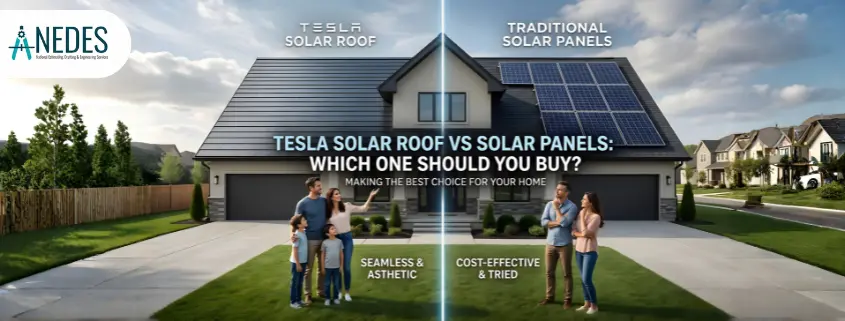
Traditional solar panels and Tesla Solar Roof are two of the most effective ways to go solar. The comparison of solar panels vs Tesla solar roof is no less than a choice between one proven, high-efficiency workhorse and a futuristic architectural system.
Both of these can slash your bills, reduce your carbon footprint, and help you save cash. However, their way of achieving grid independence varies a lot. This blog will highlight all hidden structural costs, hard facts, and the true solar roof vs panels difference.
A Complete Breakdown Of The Tech
You may wonder what exactly we are comparing here. Traditional solar panels are monolithic slabs of photovoltaic magic. They are bolted onto your existing roofing structure using heavy-duty, engineered racking systems. They sit a few inches above your shingles or tiles, capturing sunlight and feeding it directly into your inverter. It’s simple, highly effective, and unapologetic.
On the flip side, the Tesla Solar Roof doesn’t just sit on your roof. It is your roof. Tesla engineered a hybrid system of active solar-generating tiles and inactive, non-generating glass tiles that look virtually identical from street level. Instead of slapping hardware over an aging asphalt or tile roof, you tear off the old structure entirely.
You replace it with a seamless, energy-generating shield. It is easily one of the most ambitious rooftop solar solutions ever brought to the residential energy market. But that level of ambition comes with a steep price tag and a complex installation reality
Need An Expert Set Of Eyes? |
|
Not sure if your current roof decking can even handle the structural load of traditional panels? Don’t guess and don’t risk a collapse. Before you spend a dime, grab a free site inspection and consultation session with our structural engineers to check your roof’s readiness and map out your true solar potential. |
Aesthetics and Curb Appeal: The Elephant on the Roof
There was a time when people hated the way solar panels looked for some particular reasons. Traditional solar panels disrupted the architectural lines of a house. A few years back, they looked bulky, awkward and utilitarian on rooflines. However, the all-black monocrystalline panels of 2026 changed everything. With low-profile mounting hardware, they transformed aesthetics and curb appeal.
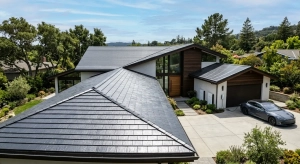
But Tesla completely rewrote the aesthetic playbook. When you look at a house equipped with a Solar Roof, you do not see a power plant. You just see a stunning, premium glass roof. The active solar cells are completely invisible from the sidewalk.
This Tesla vs solar panels comparison heavily skews toward Elon Musk’s brainchild if curb appeal is your absolute, non-negotiable priority. For historic homes, luxury waterfront properties, or neighborhoods governed by draconian Homeowner Associations (HOAs), the aesthetic superiority of the integrated glass tiles is entirely unmatched. It looks like wealth.
Performance and Efficiency: Harvesting the Sun
Looks don’t power your HVAC system during a July heatwave. Efficiency does. And this is exactly where traditional panels punch well above their weight class.
Standard high-efficiency panels available today boast conversion rates hovering strictly between 20% and 23%. They are ruthlessly engineered to maximize every single square inch of available sunlight. Because they are mounted above the roof decking, natural ambient airflow circulates beneath them. Why does this matter to you? Because solar cells hate heat. The cooler they run, the more efficiently they produce electricity.
Tesla’s solar glass tiles operate under a slightly different physical reality. While exact, independent efficiency numbers for the newest generation of tiles are closely guarded by Tesla, industry field data places them slightly lower than premium traditional panels. Furthermore, because they sit entirely flush against the roof underlayment, they lack that vital, natural cooling airflow. On a scorching summer afternoon when the sun is baking the glass, a traditional elevated array will generally outproduce a similarly sized solar roof simply because it can breathe.
Head-to-Head Performance Breakdown
| Feature | Traditional Solar Panels | Tesla Solar Roof |
| Peak Energy Efficiency | High (20% – 23%) | Moderate to High (Approx. 18-20%) |
| Temperature Management | Excellent (Airflow underneath cools cells) | Poor (Flush mount traps thermal heat) |
| Space Optimization | Highly efficient per square foot | Requires significantly more roof area for the same output |
| Post-Install Upgradeability | Easy to swap or add individual panels | Extremely difficult to expand system later |
Upfront Costs vs. Long-Term Value
Choosing between these two renewable energy for homes is exactly like choosing between a high-end, reliable Toyota and a custom-built, luxury Porsche. Both get you to the exact same destination of grid independence. One just requires a dramatically larger initial capital investment.
When it comes to the residential solar installation cost, traditional panels are the undisputed heavyweight champions of cost-effectiveness. The global manufacturing processes for standard panels are highly optimized. Competition among top-tier brands is incredibly fierce. This drives prices down to the benefit of the homeowner. You are strictly paying for the racking, the panels, the inverter, the wiring, and the labor. That’s it. You can see your Return on Investment (ROI) in as little as 5 to 7 years in many states.
The Tesla Solar Roof is an elite, premium luxury product. You are paying for an entirely new, high-end custom roof plus a complex solar energy system. If your current asphalt shingle roof is only five years old, tearing it off to install glass tiles is absolute financial madness. The ROI timeline stretches out uncomfortably long, often pushing past the 15-year mark.
Context Changes Everything!
Context is everything. If your current roof is actively leaking, visually rotting, or simply sitting at the absolute end of its 20-year lifespan, the financial math shifts dramatically. You were already going to be forced to pay $15,000 to $25,000 for a standard roof replacement anyway. Suddenly, subtracting that unavoidable structural cost from the total price of the Tesla system makes the various solar installation options much more competitive. You roll the roof and the power plant into one financed package.
Maximize Your Power
Regardless of which system sits on your roof, storing that generated power is what gives you true, unstoppable grid independence. As an affiliation partner with Tesla Powerwall certified installer networks, our specialized crews can seamlessly integrate elite battery backup systems with either traditional arrays or full solar roofs. Keep the lights on, the fridge cold, and the AC running when the neighborhood goes totally dark.
Book Your Free Consultation Now
Installation Timeline: Hours vs. Weeks
Time is money. It’s also sanity. Living inside an active construction zone is nobody’s idea of a good time.
Installation Time For Solar Panels
Bolting standard panels onto a healthy, structurally sound roof is a surgically fast operation. Once the permits clear the city planner’s desk, a highly competent, specialized crew will have the rails mounted, the panels wired, and the entire system ready for final inspection in just one to two days. It is a swift, minimally invasive procedure. You go to work in the morning, and you come home to a fully operational solar plant.
Installation Time For A Solar Roof
Installing a Solar Roof is a massive, highly disruptive construction project. It involves tearing off the old roof down to the bare plywood decking. Next comes the application of specialized, proprietary underlayment. Then, the painstaking, tedious process of individually wiring and placing thousands of small tiles (both the active solar ones and the inactive glass ones) begins. Weather delays can suddenly leave your home totally exposed to the elements.
Minor supply chain hiccups for specific flashing or edge trim pieces can grind progress to a dead halt. You are looking at a timeline measured in long weeks, not quick days. If you are racing the clock to lock in current, favorable solar net metering rates before the utility company changes the rules to their advantage, the rapid deployment of standard panels is a massive tactical advantage.
Durability and Lifespan: Weathering the Storm
Roofs take an absolute beating. They are the first line of defense against UV radiation, torrential rain, hurricane-force winds, and the occasional golf-ball-sized hailstone.
Standard panels are incredibly tough. Don’t let the glass face fool you. They are encased in tempered glass rigorously tested to withstand severe, direct impacts. Most top-tier manufacturers back their hardware with 25-year performance and degradation warranties. If a rogue tree branch does manage to smash a panel during a freak storm, replacing that single, isolated unit is a quick, cheap repair that doesn’t disrupt the rest of the array.
Tesla’s glass tiles, surprisingly to many, are arguably even stronger. They are engineered and stress-tested to be nearly three times stronger than standard clay or slate roofing tiles. Tesla backs them with a comprehensive 25-year warranty against weatherization, wind, and power retention. You can literally walk across them without fear of cracking the glass surface.
But the real vulnerability of the Tesla system doesn’t lie in the strength of the glass; it lies entirely in the underlying complexity. Thousands of individual tiles mean thousands of individual, tiny electrical connections sitting directly on your roof decking. More connections mathematically equal more potential points of failure over a grueling 25-year lifespan. Finding a fault or a voltage drop in a traditional array is straightforward. Hunting down a single bad microscopic connection under a sea of thousands of identical glass tiles requires highly specialized diagnostics and invasive tear-offs.
The Maintenance Factor: When Things Go Wrong
Solar systems live outside. They are entirely exposed to the elements, baking in ultraviolet radiation, surviving dust storms, and acting as an open invitation to nesting pigeons. Solar panel maintenance is an inescapable reality of any renewable energy for homes, but the way you handle that maintenance depends entirely on the system you choose.
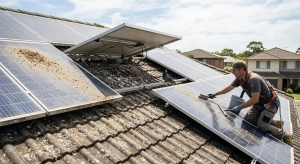
With traditional solar arrays, maintenance is highly modular and aggressively straightforward. Did a rogue golf ball shatter the glass on panel number four? A technician climbs up, unplugs the single damaged unit, bolts a fresh one onto the rail, and your system is back to peak output before lunch. Do they need cleaning? You can hire a local crew to spray them down with deionized water, instantly boosting your energy yield by 5% to 10% on a dusty summer afternoon.
The Tesla Solar Roof demands a completely different approach. The tempered glass is remarkably resilient to dirt, often self-cleaning during a heavy rainstorm. However, if a structural failure occurs beneath the glass (such as a rodent chewing through a junction wire or a micro-inverter failing), the troubleshooting process becomes a forensic investigation. Because the system is integrated tightly into the actual roof deck, finding a localized electrical drop means removing tiles. It is tedious. It requires highly specialized labor. While Tesla’s warranty covers this, the downtime for your energy production during these complex repair windows can be frustratingly long.
The Property Value Equation: Selling the Sun
Eventually, you might sell your home. When that day comes, your chosen solar system transitions from an energy generator into a massive real estate asset. Buyers actively hunt for homes with drastically reduced utility bills.
A traditional solar panel system, fully paid off and owned outright, increases a home’s market value by an average of 4.1%, according to Zillow data. Real estate appraisers have standardized formulas for valuing these systems. Buyers understand them. Mortgage lenders like them. They are a known, easily quantified asset.
The Tesla Solar Roof occupies an ultra-premium real estate niche. It undeniably skyrockets the curb appeal of a property. For high-net-worth buyers looking for architectural perfection and a zero-emission lifestyle, a Solar Roof is a massive closing hook. However, appraisers often struggle to assign an exact monetary value to it. Because it is both a roof and a power plant, comps (comparable local home sales) are incredibly difficult to find. You are banking on finding a buyer who falls in love with the aesthetic and is willing to pay the premium for Elon Musk’s integrated vision.
The Ultimate Decision Matrix
Still on the fence? Let’s aggressively simplify the decision. We have distilled two decades of industry experience into a definitive breakdown of when to pull the trigger on each system.
Choose Traditional Solar Panels If:
- Your Roof is Young: If your current asphalt, metal, or tile roof has more than 10 years of viable life remaining.
- ROI is the Priority: You want the absolute fastest financial payback period and the highest energy yield per square foot.
- Budget is Capped: You want immediate utility savings without financing the equivalent of a luxury sports car.
- Future Upgrades are Likely: You might want to easily add an EV charger or expand your array later.
Choose the Tesla Solar Roof If:
- Your Roof is Dead: You are already facing a mandatory $15,000+ roof replacement this year.
- Aesthetics Rule: You live in a strict, aggressively managed HOA or own a historic property where visible panels are unacceptable.
- Budget is Flexible: You view this not just as an energy project, but as a premium architectural home renovation.
- New Construction: You are building a custom home from the dirt up, allowing you to wrap the roof and power plant into one initial mortgage.
Conclusion
Choosing between a Tesla Solar Roof and traditional panels shouldn’t feel like a gamble. It is a calculated architectural and financial move. If your roof is dying and budget is no object, Tesla’s sleek glass ecosystem is a breathtaking structural upgrade. However, if you demand unmatched efficiency, proven reliability, and a rapid return on your investment, standard panels remain the undefeated heavyweights of grid independence. Don’t navigate this massive transition blind. Leverage our two decades of industry experience to protect your home and your wallet. Take control of your power today. Stop renting your electricity and start owning it.
People Also Ask (FAQs)
Can traditional panels charge a Tesla Powerwall?
Yes. Traditional solar panels are completely compatible with a Tesla Powerwall. As an affiliation partner with Tesla Powerwall certified installers, we seamlessly integrate elite battery backups with any high-efficiency panel array to guarantee absolute grid independence.
Is the solar roof vs panel difference huge in price?
Absolutely. Standard panels are dramatically cheaper. A Tesla Solar Roof replaces your entire roofing structure, making it a premium luxury product. Traditional panels simply mount above your existing roof, keeping upfront capital investments significantly lower and ROI faster.
How does snow affect these rooftop solar solutions?
Standard panels shed snow quickly due to their angled mounting and heat emission. Tesla glass tiles also feature a heating element capability to melt snow actively, but their flush design means snow might sit longer without direct sunlight.
Will a Tesla Solar Roof increase my property taxes?
In most jurisdictions, installing renewable energy for homes offers property tax exemptions. While your home’s resale value immediately increases, specialized solar tax exemptions typically prevent your annual property taxes from spiking due to the new installation.
Do HOA boards prefer the Tesla vs solar panels comparison?
Yes. Homeowner Associations heavily favor the Tesla Solar Roof due to its invisible aesthetics. However, many states now have laws preventing HOAs from banning traditional solar panels, though they may still dictate exact panel placement and wiring visibility.
What happens if a Tesla glass tile breaks?
While incredibly durable, if a glass tile shatters from extreme impact, replacing it is tedious. It requires a specialized crew to carefully extract and rewire the integrated tile, whereas replacing a single traditional panel takes less than an hour.
Can I add more solar capacity later?
Expanding traditional solar installation options is simple; you just mount additional panels to the rails. Expanding a Tesla Solar Roof is incredibly complex and often impossible without tearing up surrounding tiles, requiring precise upfront sizing for future needs.