
Tesla Powerwall 3 vs. FranklinWH aPower 2: Which Battery Should You Buy in 2026?
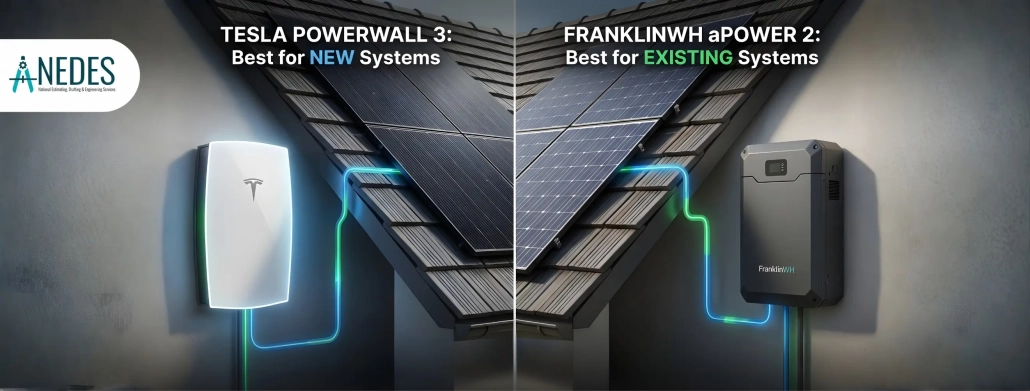
Every battery system has a specialized set of perks. While there isn’t a one-size-fits-all solution for solar battery systems, there are two names that stand out due to their efficiency and output.
- The Tesla Powerwall 3 is the undisputed king for new solar installations. It offers unmatched efficiency and integration for those building a system from scratch.
- The FranklinWH aPower 2 is the heavy-hitting champion for retrofits. Apower 2 provides seamless integration for homeowners who already have solar panels and inverters installed
In this comprehensive guide, we will check out the specs and the real-world performance of these two powerhouses to help you decide which white box belongs on your garage wall.
Everything About Home Energy in 2026
In 2026, the smart home has already graduated from voice-activated lights to fully automated energy management. Time-of-Use (TOU) rates are more aggressive than ever, making battery storage essential for financial ROI. Furthermore, extreme weather events have made backup power a necessity rather than a luxury.
In this high-stakes environment, you cannot afford a battery that just sits there. You need a system that thinks, predicts, and reacts. Both Tesla and FranklinWH claim to offer this, but they go about it in drastically different ways.
Book a free site Inspection from NEDES to know more about your energy requirements and a compatible battery system.
Book a free site Inspection from NEDES to know more about your energy requirements.
The Tesla Powerwall 3
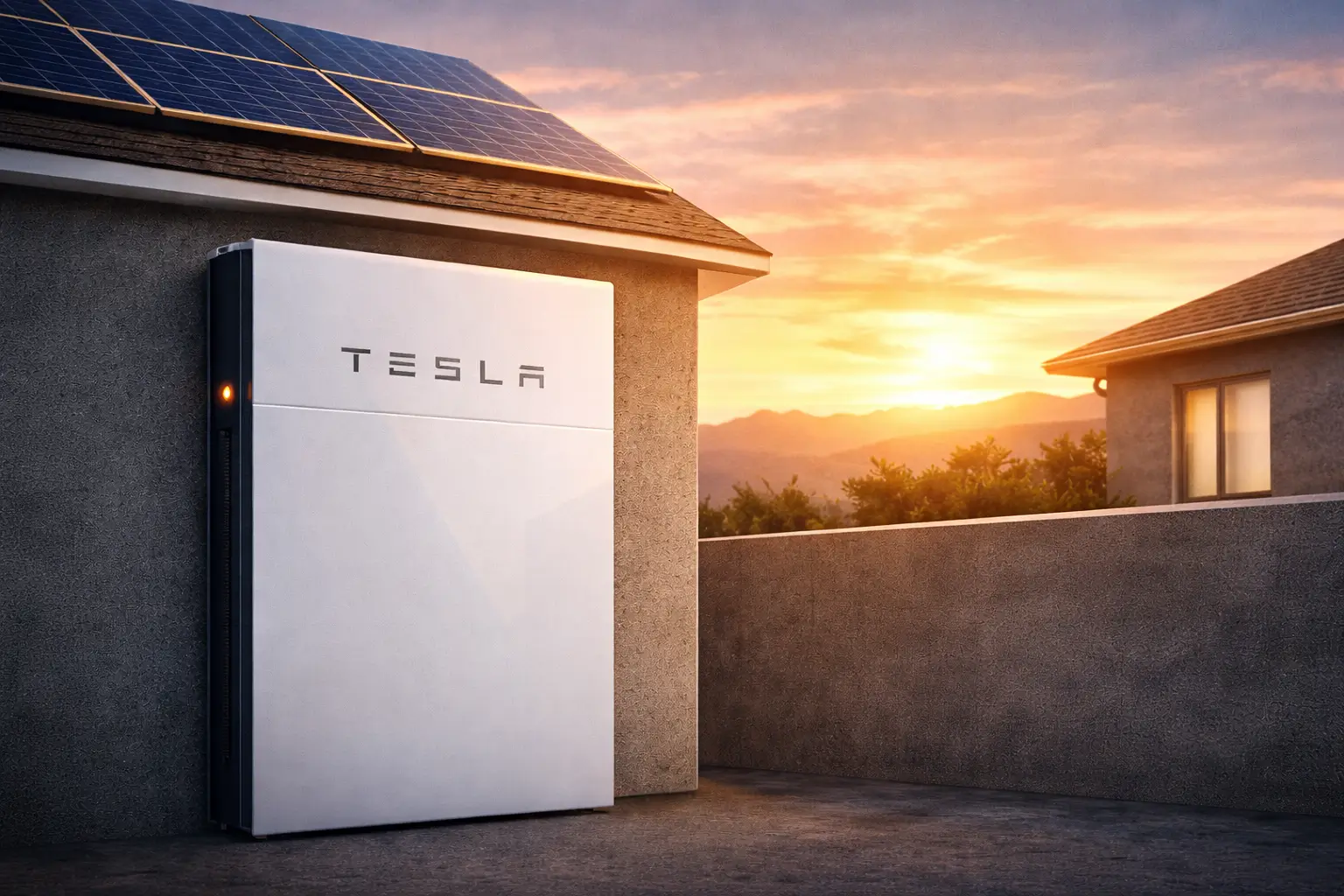
When Elon Musk first unveiled the Powerwall, it changed the industry forever. Now, in its third iteration, the Powerwall 3 has matured from a flashy gadget into a serious piece of critical infrastructure.
The All-in-One Advantage
The defining feature of the Powerwall 3 is integration. Unlike its predecessors, the Powerwall 3 is not just a battery; it is a hybrid inverter. It combines the battery system and the solar inverter into a single, compact unit.
For a homeowner installing a brand-new solar system, this is a game-changer.
- Lower Equipment Costs: You do not need to buy a separate solar inverter (like a SolarEdge or Enphase system). The Powerwall 3 handles it all.
- Higher Efficiency: Because the solar panels feed DC power directly into the battery (DC-coupling), there is less energy lost in conversion compared to AC-coupled systems.
- Aesthetics: One box does the work of two. Fewer conduits, fewer boxes on the wall, and a cleaner install.
Performance Specs
The Powerwall 3 is a beast. It boasts a continuous power output of 11.5 kW, a massive leap over the Powerwall 2’s 5 kW. What does this mean for you? It means you can run virtually your entire home (including the central air conditioner, electric stove, and dryer) without the battery tripping
- Capacity: 13.5 kWh (Scalable)
- Continuous Power: 11.5 kW on-grid / 11.5 kW backup
- Chemistry: LFP (Lithium Iron Phosphate) A major upgrade in safety and longevity over the previous NMC chemistry.
- Solar Input: 6 Solar Inputs (MPPTs), allowing for complex roof layouts without needing extra hardware.
The Tesla Ecosystem
You cannot discuss the Powerwall without mentioning the app. The Tesla app remains the gold standard for user interface. It is slick, intuitive, and allows you to control your solar, battery, and EV charger from a single screen. For homeowners who already drive a Tesla, the integration is seamless. The system’s Storm Watch feature automatically tops up the battery when severe weather is forecast.
The FranklinWH aPower 2
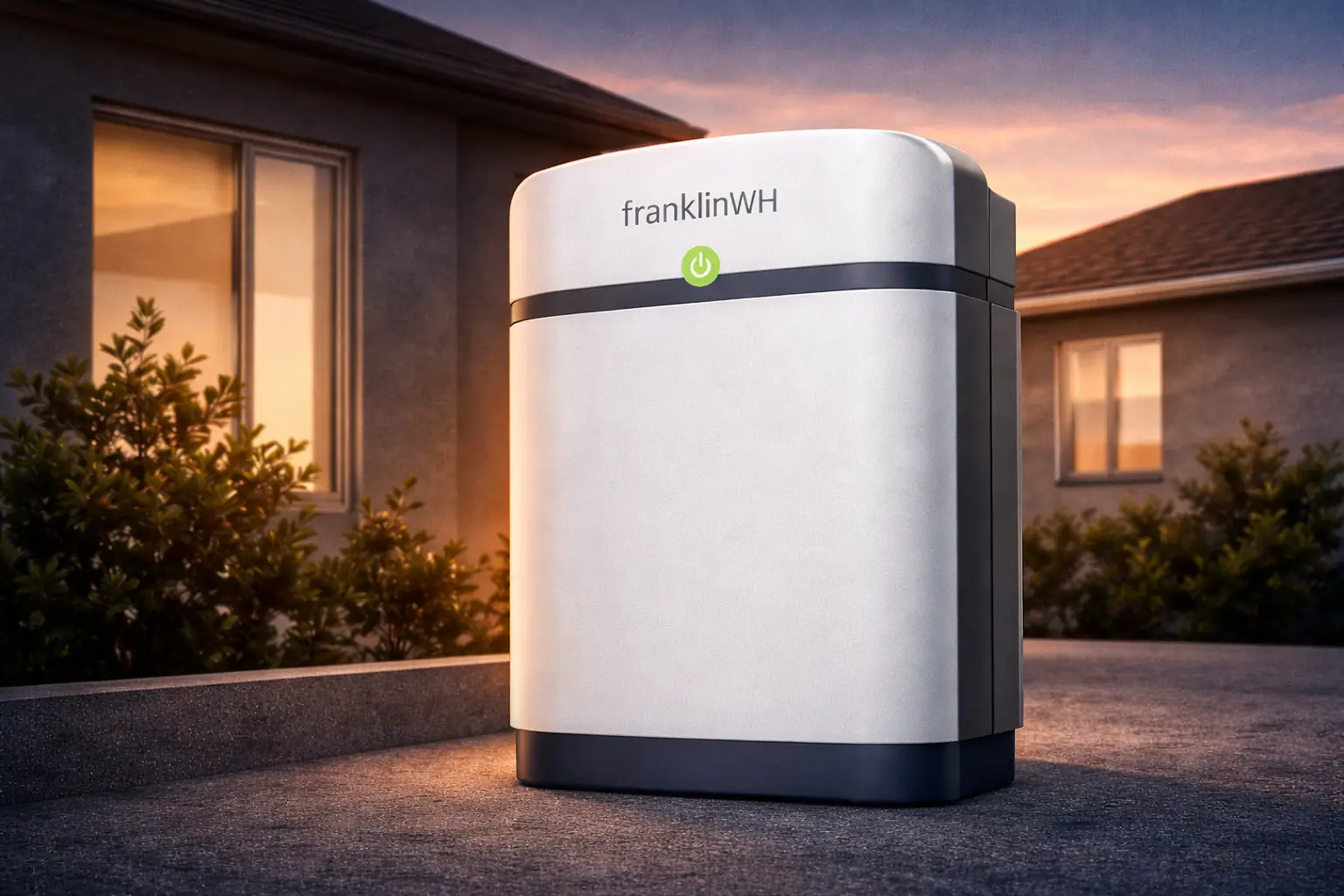
While Tesla aims to own your entire ecosystem, FranklinWH (Franklin Whole Home) takes a different approach: Agnostic Compatibility. The FranklinWH aPower 2 is designed to play nice with everyone. It doesn’t care what brand of solar panels you have, what inverter you installed five years ago, or what generator is sitting in your backyard.
The AC-Coupling Superpower
The aPower 2 is an AC-coupled battery. This means it connects to your home’s electrical panel rather than directly to the solar panels.
- Why is this better for existing systems? If you installed solar panels in 2020 with Enphase microinverters or a SolarEdge inverter, you don’t want to rip that equipment out just to add a battery. The FranklinWH sits happily alongside your existing gear, “talking” to it without interfering.
- Flexibility: It transforms a standard grid-tied solar system into a backup powerhouse without voiding existing warranties or requiring complex rewiring of the roof.
The aGate Intelligence
The secret weapon of the Franklin system isn’t just the battery; it’s the aGate X. This smart energy management device replaces your main service panel’s logic. It is the brain that acts as the traffic controller for your energy.
- Generator Integration: This is a massive win for Franklin. The aGate has a dedicated port for standby generators. If the grid goes down and your battery runs low, the aGate can automatically start your gas or propane generator to recharge the battery or power the home. Tesla can do this, but it is often clunky and requires third-party workarounds. Franklin does it natively.
- Smart Circuits: The aGate allows you to control specific loads. Want to kill power to the pool pump during an outage to save energy for the fridge? You can do that instantly from the app.
Performance Specs
FranklinWH is no slouch in the power department either.
-
- Capacity: 15 kWh (Slightly larger than Tesla)
- Continuous Power: 10 kW (standard) / Peaks higher for motor starting.
- Chemistry: LFP (Lithium Iron Phosphate). It is safe, durable, and allows for 100% depth of discharge.
- Warranty: 15 Years (beating the industry standard of 10 years).
Choosing Your 2026 Champion
Now that we have met the contestants, let’s pit them against each other in the scenarios that matter most to homeowners.
Installation Scenarios
Scenario A: The New Build (Winner: Tesla Powerwall 3)
If you are building a new home or installing solar for the very first time, the Tesla Powerwall 3 is almost unbeatable in 2026.
- The Logic: Since the Powerwall 3 is your solar inverter, you save $2,000–$3,000 on hardware costs immediately. You don’t need to buy a separate inverter.
- The Efficiency: The DC-coupled architecture captures more of the sun’s energy. In a new install, every percentage point of efficiency counts toward your ROI.
- The Look: It is cleaner. One white box on the wall handles everything.
Scenario B: The Retrofit (Winner: FranklinWH aPower)
You have had solar for three years. You love it, but you hate the blackouts. You want to add a battery.
- The Logic: If you choose Tesla Powerwall 3 here, you might be paying for inverter technology you don’t need, or worse, creating a complex dual-inverter setup that is a headache to commission.
- The Franklin Advantage: The Franklin aPower connects to your main panel. It sees your existing solar simply as a power source. It doesn’t try to override your microinverters or string inverters. It just works. It is the path of least resistance for upgrading an existing home.
Power & Motor Starting
Both batteries use LFP chemistry, which is the gold standard in 2026 for safety and lifespan. However, their power delivery differs.
- Tesla Powerwall 3: With 11.5 kW continuous power, a single unit can start a 5-ton air conditioner. This is massive. In the past, you needed two batteries to run a large AC. Now, one Powerwall 3 can handle the surge (LRA) of heavy appliances.
- FranklinWH: A single aPower 2 unit offers 10 kW continuous. If you have a large home with central AC, one Franklin unit might struggle to start the compressor alone. You would likely need to install two Franklin batteries to match the output of one Powerwall 3.
- However, Franklin’s smart load management (via aGate) allows you to shed heavy loads automatically. If the grid fails, the Franklin system can instantly cut power to the AC to ensure the lights and internet stay on.
Generator Integration
For many Americans living in areas prone to hurricanes or multi-day ice storms (we’re looking at you, Texas and Florida), a battery alone isn’t enough. You need a generator for the long haul.
- FranklinWH (The Clear Winner): The aGate was built with generators in mind. It treats the generator as just another input. It can auto-start it, use it to charge the battery, and shut it off when the sun comes up. It is seamless and native.
- Tesla: Tesla can work with generators, but it has historically been a friction point. It often requires a specific type of generator and complex switching mechanisms. While software updates have improved this, it is not as plug-and-play as the Franklin solution.
The App Experienced
- Tesla: The interface is beautiful, simple, and satisfying. If you want to “set it and forget it,” Tesla wins.
- FranklinWH: The app gives you granular control. You can see exactly which circuits are drawing power and turn them on/off individually (if wired to the smart circuits). For the energy geek who wants total control, Franklin is a playground.
The Financial Equation: Cost vs. Value
In 2026, pricing has stabilized, but differences remain.
Tesla Powerwall 3 Pricing:
Tesla has aggressively priced the Powerwall 3 to dominate the market ($10,000-$15,000). Because it eliminates the need for a separate inverter, the total system cost for a new solar+battery install is often lower with Tesla.
- Value Proposition: You get a battery, an inverter, and a system controller for one price.
FranklinWH Pricing:
The hardware cost of a Franklin unit is comparable to Tesla, but you must factor in the installation.
- Retrofit Value: For retrofits, Franklin is often cheaper to install than Tesla because it requires less rewiring of the existing solar setup.
- Multi-Battery Value: If you need two batteries, Franklin’s modular design stacks easily, but costs can creep up if you need massive continuous power output compared to the punch-per-dollar of the PW3’s 11.5kW.

Which One Belongs in Your Home?
At NEDES, we analyze your specific home energy profile before making a recommendation. You can book multiple consultation sessions to make an informed decision about the solar battery.
However, as a general rule for 2026:
Buy the Tesla Powerwall 3 IF:
- You are going Solar for the first time: The integrated hybrid inverter will save you money and space
- You have heavy appliances: You need to start a 5-ton AC unit on a single battery.
- You drive a Tesla: The ecosystem integration is convenient and powerful.
- You want high aesthetics: You want a minimalist, clean installation with few external boxes.
Buy the FranklinWH aPower 2 IF:
- You already have Solar Panels: You want to add backup without touching your existing, warrantied solar inverter.
- You own a Generator: You want a seamless integration between the grid, solar, battery, and generator.
- You want Smart Circuit Control: You want the ability to turn off the pool pump or EV charger remotely during a blackout to extend battery life.
- You have Enphase Microinverters: Franklin pairs beautifully with microinverter systems, preserving their functionality completely.
The Bottom Line
Choosing the right battery is only half the battle. The quality of the installation determines the reliability of the system. At NEDES, we partner with Align Solar Protection and provide life insurance for your solar systems.
The best part is that NEDES is a leading Tesla Powerwall-certified installer firm. That means if you consider going for the Powerwall 3, we are the perfect fit! Contact NEDES today for a custom energy analysis and a free quote!